SEVA Business Hub

Digitalisation and autonomy

Software, data and autonomy are transforming both the car and the entire industry.
The electric platform is their foundation.

Digitalisation and autonomy

Three Layers of a Single Transformation

The automotive industry is transforming three things at once, and each of them depends on the other two. The electric platform is the hardware foundation. Software-defined architecture is the car’s digital brain. Autonomous driving runs on top of it.

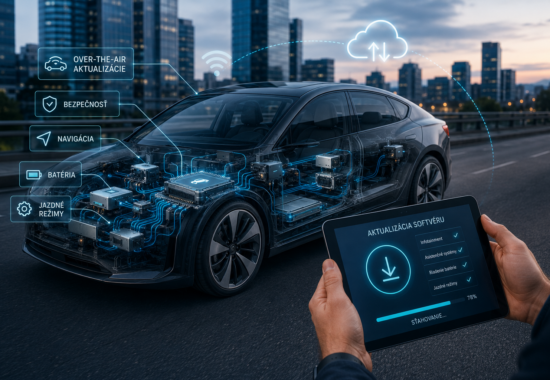
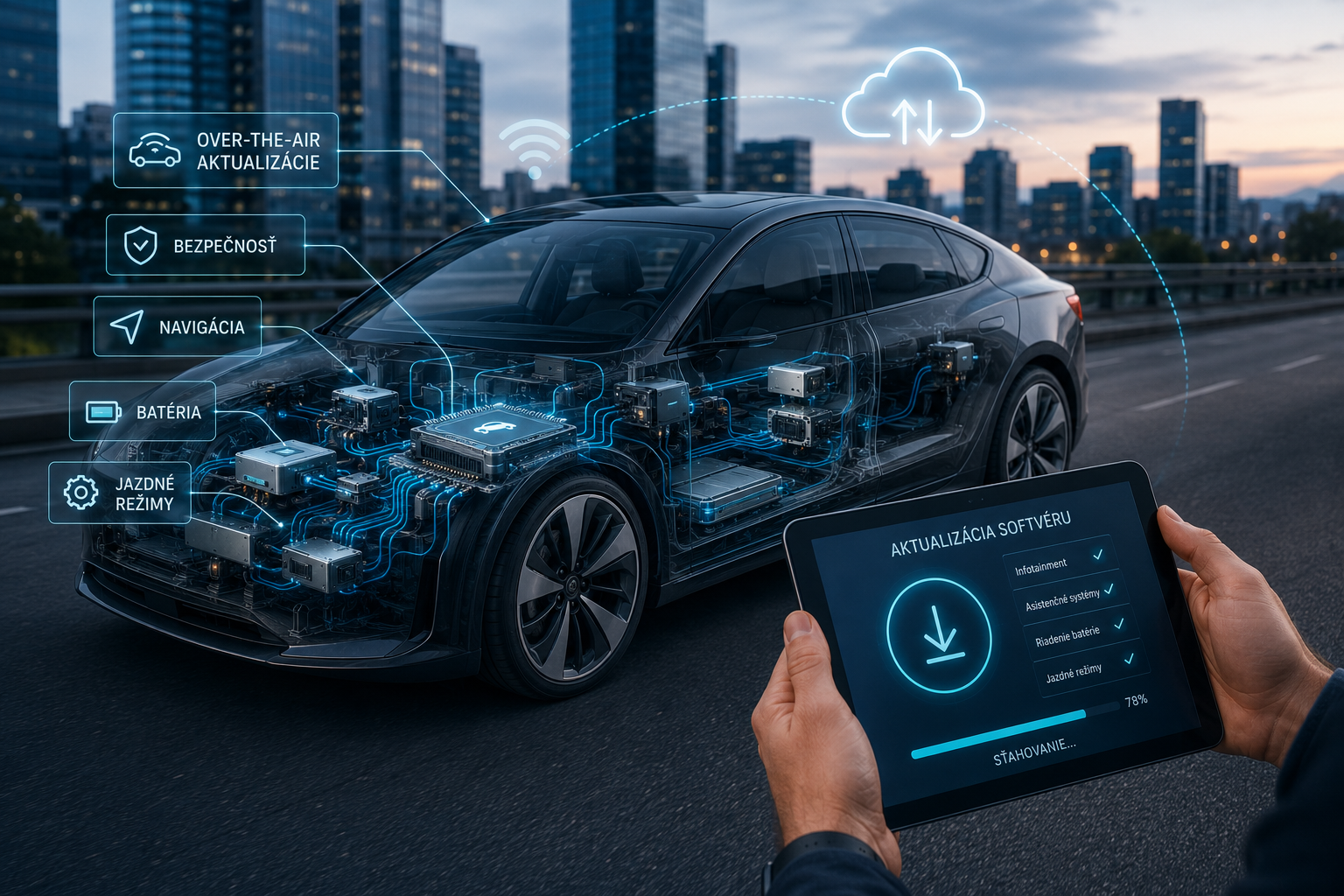
In a software-defined vehicle (SDV), functions are no longer controlled by dozens of distributed units, but by a small number of powerful computers. New features can be added over the internet even years after the vehicle leaves the production line. Value in the industry is shifting from the combustion engine to electric propulsion, and from hardware to software, data and services.

Slovakia produced more than 1.07 million cars in 2025 and, with 196 vehicles produced per 1,000 inhabitants, remains the global leader in per-capita vehicle production. Whether it can retain this position in the next wave of transformation will be decided in software.

V4SDV Connect: Slovakia, Poland and Hungary at one table

Together with the Polish New Mobility Association PSNM and Hungary’s ZONE Cluster, we are preparing a joint map of legislation and standards in the three countries, a roundtable with ministries in Bratislava, panels at congresses in Katowice and Budapest, and an expert visit to the ZalaZone test track. The project runs from September 2026 to February 2027 with the support of the International Visegrad Fund.
Project page
Slovakia

Strong manufacturing, weak voice in the rules

Slovak industry knows how to build cars. The open question is whether it will also have a seat at the table where the rules are written and the software is developed.

In March 2025, the European Commission announced the ECAVA alliance (European Connected and Autonomous Vehicle Alliance) and formally launched it in September. Its role is to coordinate development and investment in software-defined vehicles, automotive hardware, artificial intelligence and data, as well as the deployment of autonomous vehicles, while providing input for European legislation.

In parallel, an initiative is developing an open European software platform for SDVs, with the goal of bringing it into series production by 2030. Those who do not get involved now may later find themselves simply adopting decisions made elsewhere.

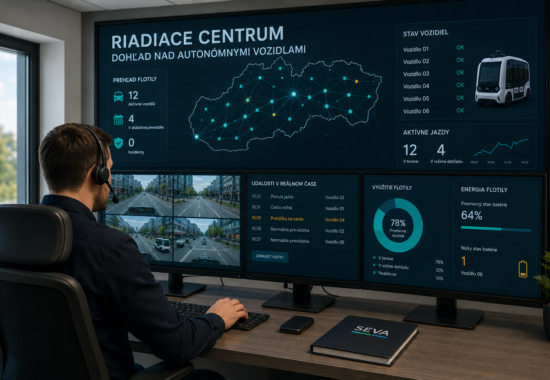
Meanwhile, Slovakia is working on legislation for fully automated vehicles. An amendment to three laws is intended to create a pathway from testing outside public roads to the commercial transport of passengers and goods. Slovakia could therefore become one of the first countries in the region with a complete legal framework for autonomous vehicle operation.

How it works step by step
Slovakia in the digital transformation
Map of Slovakia – automotive, software and autonomous driving
1.07 mil. cars produced in 2025
196 vehicles per 1,000 inhabitants
2030 target for the European SDV platform
Decisions about the next generation of the automotive industry are increasingly being made outside factory halls.


Why autonomy needs an electric platform

A peer-reviewed study in the World Electric Vehicle Journal (2025) compared how autonomous systems perform on electric and combustion-engine platforms. The difference is not about comfort, but about whether the system can operate reliably at all.

Full analysis

Sensor power supply

Electric vehicle
voltage fluctuations in the tens of millivolts
× Combustion-engine car
interference on the order of 1 to 2 volts

Cameras, LiDARs and control computers need clean, stable voltage. An alternator is orders of magnitude less stable than a converter supplied by the traction battery.

With the engine switched off

Electric vehicle
sensors are powered directly by the traction battery
× Combustion-engine car
12V battery capacity drops by 20 to 30%

An autonomous vehicle must be able to “see” even when stationary. A lead-acid starter battery is quickly damaged by deep discharge.

Computer cooling

Electric vehicle
a liquid cooling loop can dissipate more than 300 W
× Combustion-engine car
an air-cooled unit can handle up to 50 W

An autonomous driving compute platform consumes 80 to 120 W. An electric vehicle already has liquid cooling circuits for the battery, motor and inverter.

Over-the-air updates

Electric vehicle
updates while the vehicle is charging
× Combustion-engine car
requires the engine running or the ignition switched on

Autonomous driving software is continuously improved. Starting an engine at night in an underground garage just to perform an update can conflict with noise and emissions regulations in many cities.

SEVA Academy brings together articles, guides, podcasts, videos and other expert materials created over the years by the Slovak Electric Vehicle Association. Here is a selection of educational content we have prepared on the topic Autonomy and SDV.

Používame súbory cookies na zaistenie funkčnosti webu a s vaším súhlasom aj na personalizáciu obsahu našich webových stránok. We use cookies to ensure the functionality of the website and, with your consent, to personalize the content of our website. View more
Cookies settings
Súhlasím
Odmietnuť
Cookies
Privacy & Cookies policy
Cookie name Active
Čo sú cookies? Súbory cookies a ďalšie technológie nám pomáhajú zlepšovať naše služby, pomáhajú nám analyzovať výkon webu a umožňujú nám pomáhať zákazníkom vo výbere správneho tovaru. V nastavení si môžete vybrať, ktoré cookies môžeme používať. Svoj súhlas môžete kedykoľvek odvolať. What are cookies? Cookies and other technologies help us improve our services, help us analyze website performance and enable us to help customers choose the right product. In the settings, you can choose which cookies we can use. You can withdraw your consent at any time.
Save settings
Cookies settings