
The first ultra-fast charging stations on Slovakia’s TEN-T corridors are now a reality. OMV Slovakia and ZSE Drive have recently opened new locations that were established as part of a national project supported by the Recovery and Resilience Plan. The Slovak Association for Electromobility (SEVA) has been involved in the preparation of this initiative from the very beginning—from proposing its inclusion in the Recovery Plan to providing expert recommendations on the project’s implementation. We are very pleased that these efforts have been crowned with success.

Slovakia has reached an important milestone in the development of its charging infrastructure. OMV Slovakia and ZSE Drive have launched the first highway charging hubs, which are being built as part of a project to construct a national network of ultra-fast charging stations along highways and expressways within the TEN-T network.
For electric vehicle drivers, this means greater comfort on long trips, shorter stops, and greater peace of mind when traveling across Slovakia. For the entire electric mobility sector, however, it means even more: a concrete result of political and technical efforts that began as early as the preparation of the Recovery and Resilience Plan.
SEVA was involved from the very beginning
The Slovak Association for Electromobility has long advocated for the development of high-quality, accessible, and technologically advanced charging infrastructure. Even during the preparation of the Recovery Plan, we proposed that it include systematic support for the construction of public charging infrastructure, including high-power hubs along major road and highway corridors. During the preparatory phase, we held discussions with representatives from the Ministries of Finance, Economy, and Transportation; provided expert input on the programming of the measure; and prepared background materials on expected market development, the number of charging points, the budget, and milestones.
Subsequently, during the project’s implementation, we supported the state-owned company MH Invest to ensure the project was aligned with European standards for the backbone network. This primarily involved recommendations regarding the project design, the construction and operation model, the selection of operators through concessions, requirements for the operation of charging stations, technical parameters, user comfort, and the location of individual sites.
“Today we are seeing the first concrete results of the work that began several years ago during the preparation of the Recovery Plan. This is an important moment for electric mobility in Slovakia: it’s no longer just about strategies, challenges, and plans, but about actual charging hubs along highway corridors. This is what public policy should look like—translating into concrete infrastructure for drivers,” says Patrik Križanský, director of SEVA and vice president of E-Mobility Europe.
The first locations were launched by SEVA members
OMV Slovakia and ZSE Drive were the first to announce the opening of new hubs. Both are SEVA members and are among the active players who have long been involved in the development of the public charging network in Slovakia. Other members of the association also participated in the international tender; OMV, ZSE Drive, and ejoin ultimately emerged as the successful operators.
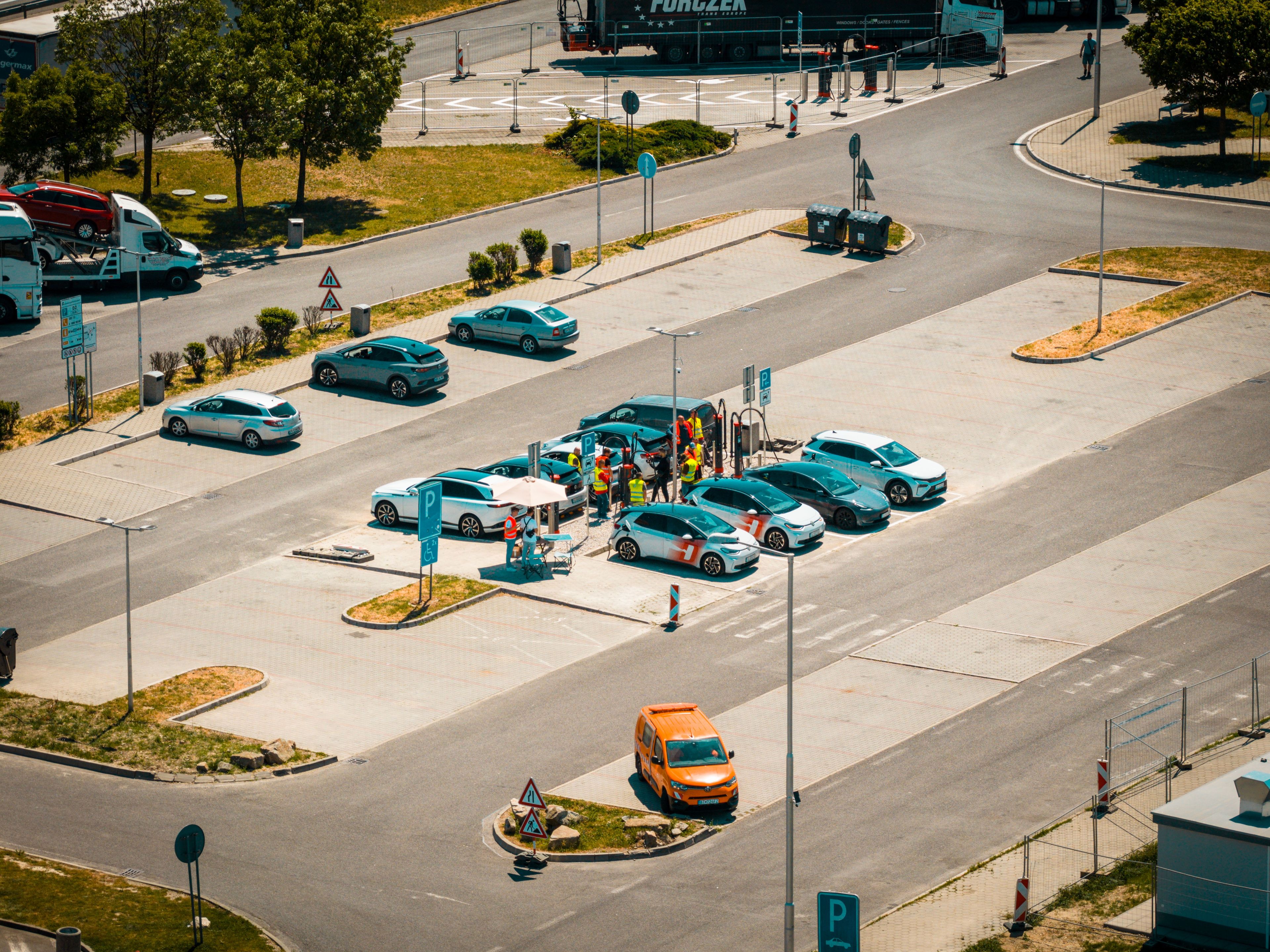
ZSE Drive opened the first new-generation highway charging hub in Jarovce , designed for both electric passenger cars and electric trucks. The site offers 9 charging points with a power output of up to 300 kW for passenger vehicles and 2 points with a power output of up to 400 kW for freight transport. The hub’s total power output reaches 1.4 MW.
More information: ZSE Drive press release
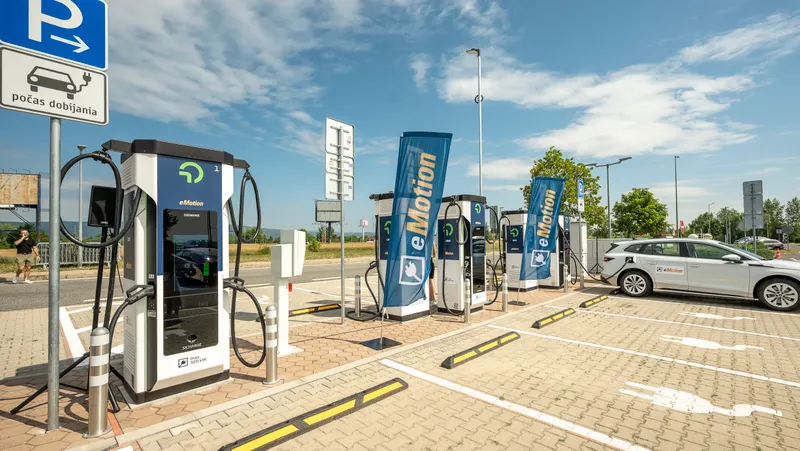
OMV Slovakia has launched its first ultra-fast charging hub at the Zlaté Piesky rest stop on the road to Bratislava. As part of the project, the company plans to build 12 locations, each with 6 to 12 charging points with a power output of up to 400 kW. The network will also include charging stations for trucks at 5 locations.
More information: OMV Slovakia press release
Charging on Highways as a Prerequisite for Trust
Public charging infrastructure in Slovakia has grown significantly in recent years, but ultra-fast charging hubs on highways are of particular importance. Especially on long routes, it is crucial for drivers to be certain that charging will be available, fast, reliable, and easy to use. Until now, the most powerful charging stations have primarily been developed as individual investments by specific service providers. However, the project under the Recovery Plan introduces a systematic government approach to backbone infrastructure along the TEN-T corridors. This is important not only for passenger transport but also for the next phase of electrification—including light commercial vehicles, buses, and freight transport.
“If electromobility is to be a viable alternative even on longer routes, we need a high-quality backbone network. It’s not enough to have many charging points in cities. Drivers need to know they can reliably charge their vehicles on the highway, while traveling across Slovakia, abroad, or during business trips on major routes,” adds Patrik Križanský.
The entire project is expected to result in 35 charging parks
Upon completion of the project, 35 charging parks with a total of 251 charging points are to be established in Slovakia. Of these, 219 points will be designated for passenger cars and light commercial vehicles, and 32 points for trucks and heavy commercial vehicles. This is one of the most significant public support projects for electromobility in Slovakia.
At the same time, it is a project that helps Slovakia meet the requirements of the European AFIR Regulation on the deployment of alternative fuels infrastructure. This regulation requires member states to ensure adequate coverage of major transportation corridors with charging infrastructure.
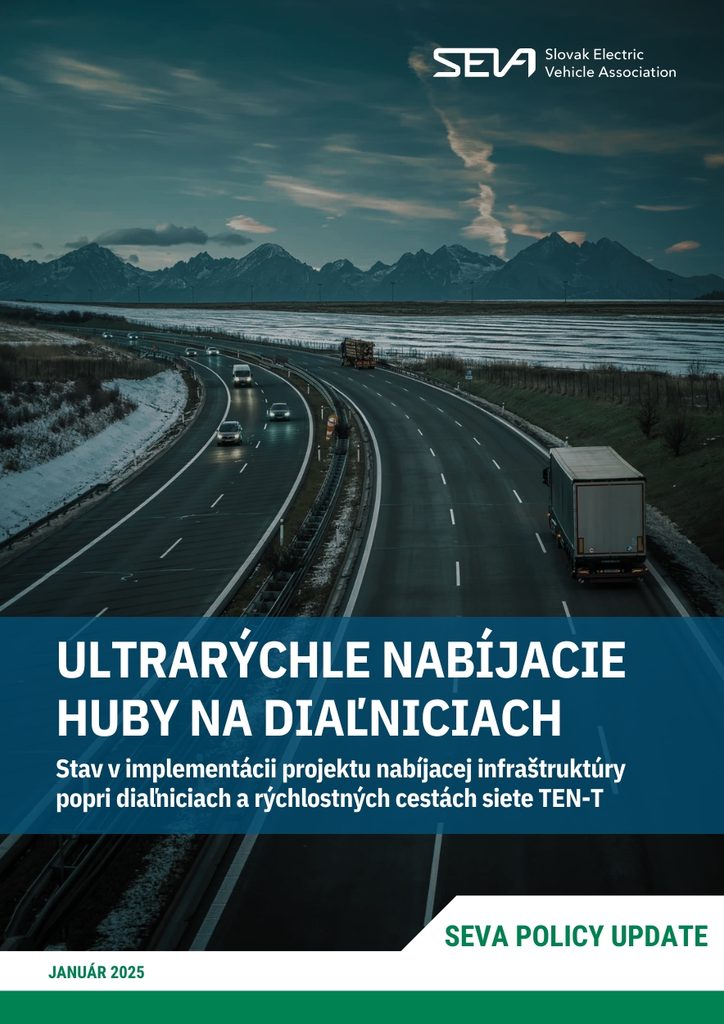
Construction Must Continue
The opening of the first hubs is a reason to be pleased, but not to rest on our laurels. The number of electric vehicles on Slovak roads is growing, and so are drivers’ expectations. SEVA will continue to monitor the project’s implementation and provide expert input to ensure that infrastructure in Slovakia develops in line with market needs, the requirements of European legislation, and drivers’ expectations.
The first hubs demonstrate that when expert data, public policy, and market capabilities come together in a single project, the results can be seen in practice. This is exactly the kind of collaboration Slovakia needs for the further development of electromobility—in infrastructure, corporate fleets, freight transport, and the automotive industry.
“This project is a good example of how electromobility is not just a topic for the future. It is a practical agenda in which decisions are being made today regarding the quality of transportation infrastructure, the competitiveness of services, and Slovakia’s readiness for the next phase of transportation transformation,” concludes Patrik Križanský.