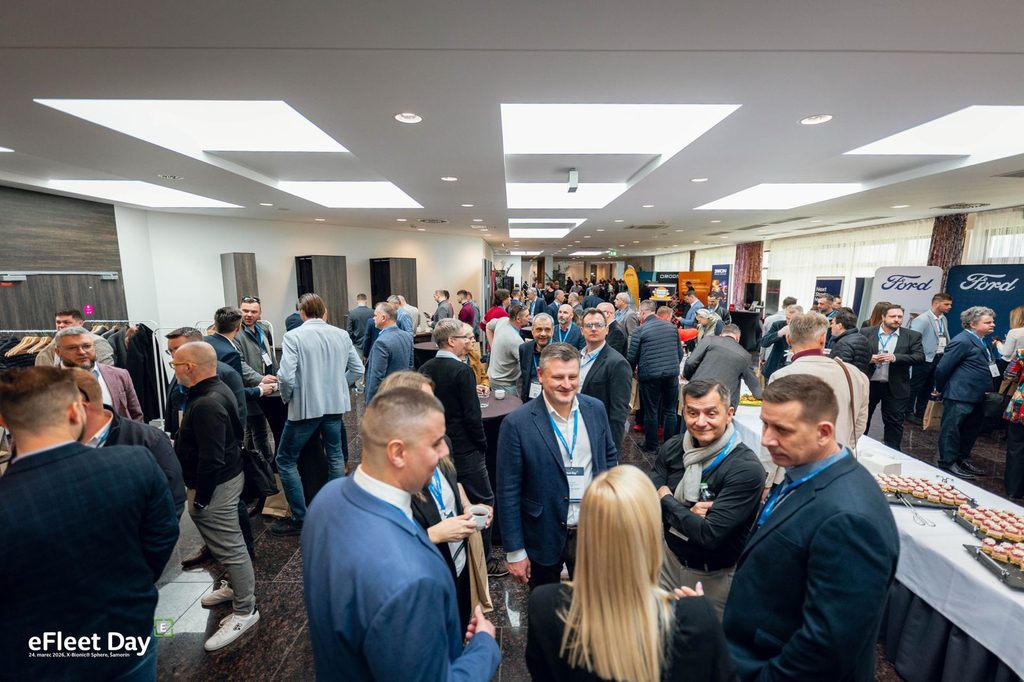
The fifth annual edition of Slovakia’s largest professional conference on electric mobility in the corporate sector reaffirmed that the electrification of corporate fleets is no longer a niche topic for technology enthusiasts. eFleet Day 2026 brought together in one place representatives from companies, the energy sector, the government, developers, vehicle manufacturers, charging service providers, and experts in financing, accounting, regulation, and the battery supply chain. The conference program focused not only on cars and chargers, but primarily on how the economics of corporate mobility are changing, where new business models are emerging, and what regulations the market will have to navigate in the coming months and years.
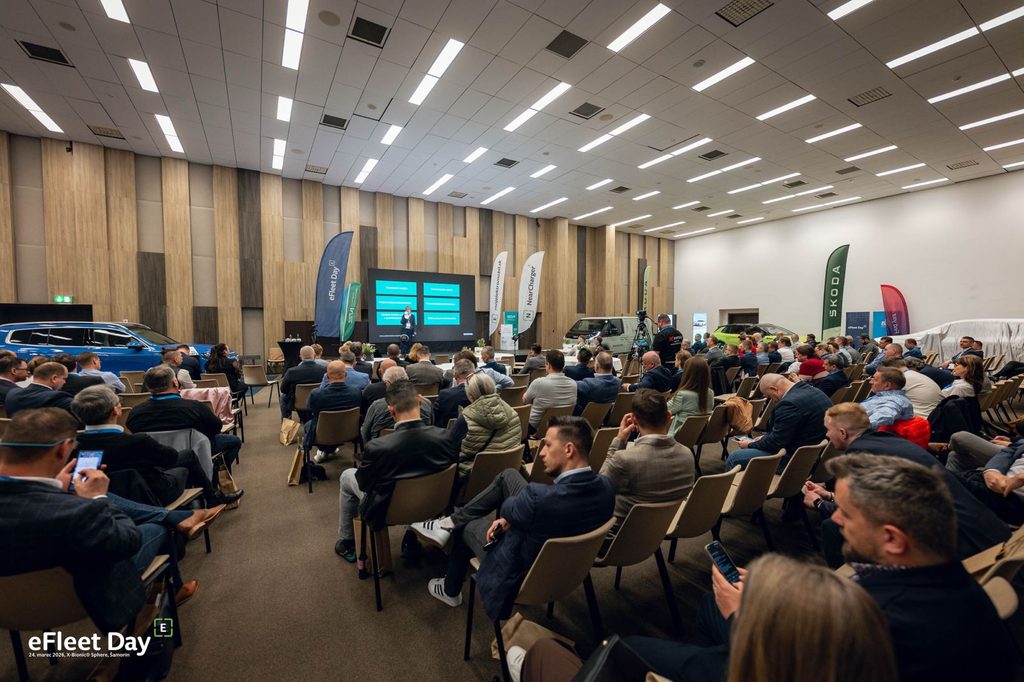
The conference took place at a time when the Slovak market is entering a new phase—there are over 26,000 battery-electric passenger cars in operation on Slovak roads (as of February 28, 2026) and the public charging network has since grown to more than 3,086 charging points across 1,197 locations, with an installed capacity of 201 MW. It is precisely this combination of a growing number of vehicles and a more robust infrastructure that has created a framework in which eFleet Day 2026 became the natural venue for expert discussion on the next steps to advance the electric mobility ecosystem in Slovakia.
The conference brought together more than 600 registered participants from over 200 companies and organizations. This substantial increase in attendance demonstrates that corporate electromobility must simultaneously address vehicles, charging, billing, ESG, energy, permitting, and the residual value of cars. SEVA Director Patrik Križanský outlined the core of this year’s program in his opening remarks: “We’ll be discussing how you can save money—or even make money—by charging vehicles using renewable energy sources.” Michal Chabada, founder of the Mojelektromobil.sk portal, noted that months of preparation went into the event and that the goal is not only to present electromobility from a technical perspective but also in a practical and accessible way.
The conference got off to a strong start thanks to a keynote speech by Adela Mack, who spoke on the topic “Siemens’ Path to Sustainability and Electromobility.” What does the transition to sustainable corporate mobility look like at one of the world’s largest technology companies, where decarbonization is one of the main pillars of its strategy and the goal is a fully electric fleet? The answers to this question set the tone for the entire day: Electric mobility in companies does not function as an isolated “fleet project,” but rather as part of a broader transformation that affects procurement, internal processes, infrastructure, energy, and corporate culture.
Credits for Renewable Charging
One of the most closely watched topics of the day was credits for charging with electricity from renewable energy sources, a subject addressed in a panel discussion by Ondrej Kulich (OKTE), Patrik Rzavský ( Sféra), Peter Kalman ( Greenlogy), and Michal Urban ( Urbanix). Their remarks made it clear that this is not merely a marginal addition, but a fundamental shift in the economics of charging. The approved amendment to the Energy Act introduces a system under which credits can be issued for electricity from renewable energy sources consumed while charging electric vehicles, with the key provisions of the mechanism taking effect on September 1, 2026. The law stipulates that a credit will be generated for every 1 kWh of electricity if the charging station operator verifies the electricity’s origin from renewable energy sources and meets the conditions for metering, registration, and reporting requirements within the system of the Short-Term Electricity Market Organizer (OKTE), which administers the short-term electricity market, operates the system of guarantees of electricity origin, and maintains a central registry of energy data in Slovakia. The credits will be recorded in a registry, transferable, and usable to fulfill the obligations of entities in the fuel market. This is precisely why the conference addressed not only the environmental benefits but also a new source of revenue that could significantly impact the return on investment in both public and private charging infrastructure.
Battery Recycling as a Path to Sustainability
The topic of battery circularity, discussed by Igor Krajčí (Power Battery) and Pavol Kováč (ShredCo), resonated just as strongly. They shifted the debate away from stereotypical questions about “battery life” to a much more important issue: what does the entire battery life cycle look like after its first service life in a vehicle ends, who is responsible for it, and how do disassembly, logistics, safety, pre-processing, and the recovery of valuable materials. The EU is already establishing a new framework for batteries through Regulation 2023/1542, which emphasizes the entire battery life cycle—from placing on the market through collection and record-keeping to recycling and the reuse of materials. For Slovak industry, this issue has even broader significance. SEVA has long pointed out that if Slovakia is to maintain added value in the automotive sector even after the advent of electric propulsion, it is not enough to simply assemble cars; the country needs to be part of the battery supply chain, from pack production all the way through to recycling. This is one reason why the conference emphasized that recycling is not “the end of the battery’s story,” but rather part of a new industrial ecosystem.
How to Install Chargers in Buildings
A session dedicated to the installation of chargers in buildings also generated significant interest, featuring presentations by Peter Bánovec (ejoin), Daniel Hrčka (Delta Group), Tomáš Čorej (Corwin), and Šimon Hudák (Fuergy). It was precisely during this panel discussion that it became clear how quickly electromobility is moving from the notion of “anyone who wants to can install a charger” to a complex interplay of building codes, energy capacity, fire safety, property ownership, and building design. The experts addressed the current tension between the need to accelerate construction and the need for clear rules, particularly regarding garages, office buildings, and commercial complexes. Yet this is by no means an academic topic. Non-public charging at companies, depots, office buildings, and private garages accounts for the majority of actual charging capacity, and without clear rules, it will not be possible to significantly accelerate the electrification of vehicle fleets.
Test Drives and Slovak Premieres
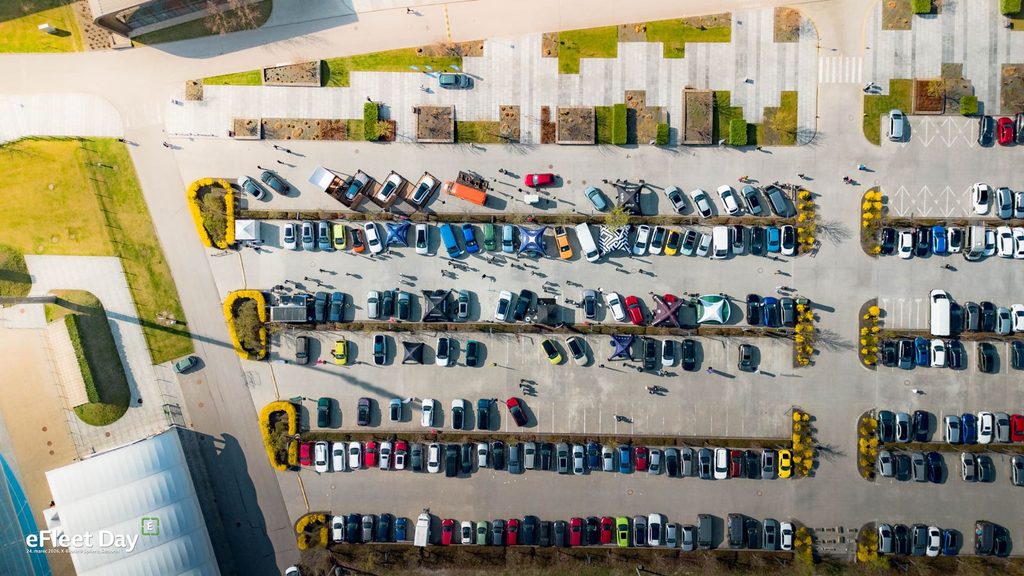
However, the conference remained true to what makes eFleet Day an exceptional event: combining expert content with hands-on experience. On Tuesday, the “Mobile Battery” solution made its European debut—a portable battery charger for electric vehicles that is particularly useful in situations where fixed charging infrastructure is not available, such as at events, power outages, or even as a quick solution for fleet vehicles in areas where a charging station is still under construction. In addition, participants had access to a large test area and dozens of vehicles from various segments. Among the officially unveiled models were the Mercedes-Benz GLC, Kia PV5 Passenger, Kia PV5 Cargo, Kia EV2 (Slovak premiere), BMW iX3, Hyundai IONIQ 9, Volvo ES90, Suzuki e-VITARA ( Slovak premiere), Ford E-Tourneo Courier, DS N°8, MG4 Urban ( Slovak premiere), MG S9 PHEV (Slovak premiere), Renault Trafic E-Tech electric ( Slovak premiere), and the Nissan Micra (Slovak premiere). Another major highlight was undoubtedly the XPENG P7, which arrived in Slovakia just one day before the event began, making it one of the very first vehicles of this model series in Europe. Test drives were once again the reason why eFleet Day became a place where, for many fleet managers, media representatives, and partners , electromobility is not only explained but also experienced firsthand.
NearCharger.sk – Electric Mobility for Everyone
Michal Chabada and Oliver Stanley presented new features as part of their NearCharger.sk project, which will effectively help both companies and individuals transition to electric mobility. The platform connects the entire electric mobility ecosystem in one place—it allows users to select and compare new and used electric vehicles, builds a secondary market through an integrated classifieds portal, showcases charging options and accessories, and helps even complete beginners navigate the world of electric mobility. NearCharger also functions as a specialized EV marketplace with a catalog of more than a thousand electric vehicle models available on the Slovak market. For vehicles, it also displays data that is missing from standard classifieds portals for internal combustion engine cars, such as real-world range in summer and winter, charging time, energy consumption converted to fuel equivalent, battery health, battery warranty, and charging port location.
The platform also includes a map of the charging infrastructure, solutions for home charging and wallboxes, a selection of accessories for electric vehicles, a glossary of terms, and a guide to electric mobility. The portal also offers an administrator interface for dealers and partners, who can track statistics and inquiries and manage their offers. NearCharger connects the online environment with events, test drives, and exhibitions, thereby linking information with real-world experience. The organizers have also prepared a special offer for eFleet Day participants, allowing them to try out all of the platform’s features in practice for free.