
Slovakia is launching a new credit system for electricity from renewable sources used to charge electric vehicles. For every kilowatt-hour, operators of both public and private charging stations can earn one electronic, transferable credit, which they can then sell to fuel suppliers, who will use the credits to meet their legal obligations. This creates a new potential source of revenue for charging infrastructure operators. All they need to do is supply electric vehicles with energy certified as coming from renewable sources and meet the requirements of the Short-Term Electricity Market Organizer. OKTE is officially launching the system today, the final form of which was significantly shaped by the activities of the Slovak Association for Electromobility (SEVA).
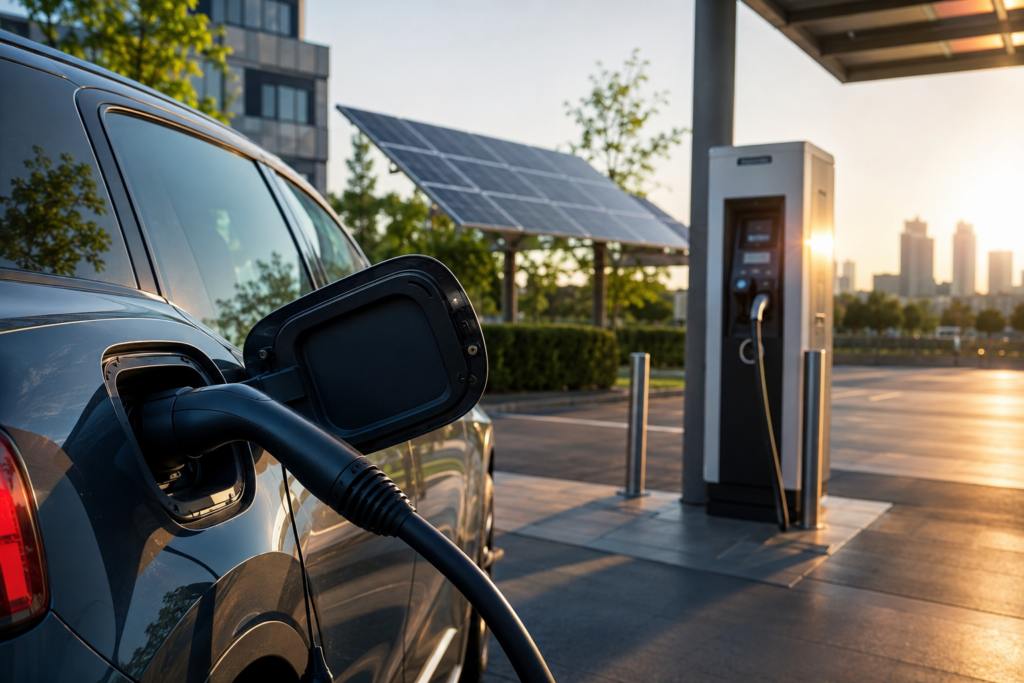
A credit is neither a subsidy nor a grant for the construction of a charging station. It is generated only during the charging process itself—for every 1 kWh of electricity supplied from renewable sources, OKTE may issue one credit. The credit has its own market value, and its price is determined by an agreement between the seller and the buyer: “For charging infrastructure operators, this is a completely new source of revenue that does not arise from additional investment but from the use of existing chargers. The actual value of the credits will be determined by the functioning market, but our calculations suggest that the amounts could be attractive even for smaller charging infrastructure operators, such as companies with their own electric fleets, shopping centers and parking garages, property managers, and others,” says Patrik Križanský, director of the Slovak Association for Electromobility (SEVA), adding: “According to our estimates, the market value of credits issued for 1 MWh of eligible electricity could reach 25 euros or more.”
Own photovoltaic systems are not required
Electricity does not have to come from solar panels or another renewable source located directly at the charging station. The original proposal, however, had only accounted for electricity generated from a renewable source directly at the charging location. However, during the system’s development, SEVA advocated for the option to verify the origin of electricity through guarantees of origin, and this option was ultimately incorporated into Slovak legislation. “If credits were available only to charging stations with their own renewable energy sources, the system would apply to only a very small portion of the market. Guarantees of origin make it a tool that any charging station operator can realistically use,” explains Križanský, highlighting how SEVA’s successful efforts have helped the entire electric mobility ecosystem in Slovakia.
At the same time, the Slovak credit system is not limited to publicly accessible charging points, which was also one of SEVA’s key recommendations. As early as in its 2024 position paper, SEVA pointed out that non-public charging could account for approximately 70 to 80 percent of the total volume of electric vehicle charging, and excluding it would significantly limit the economic significance of the credits. “It is precisely corporate fleets and depots that can concentrate large volumes of charging in one place. If we want to support the electrification of corporate transportation, this electricity must have the same value as electricity supplied at a public charging station,” Križanský asserts.
Fossil fuel suppliers will be the buyers
Demand for credits is driven by legal obligations imposed on companies that supply gasoline and diesel to the Slovak market. These companies must gradually increase the share of energy from renewable sources in transportation. The reference value will increase from 9.5% in 2026 to 27% in 2030. Fuel suppliers can use credits for electricity from renewable energy sources supplied to electric vehicles to meet this obligation. Each credit used counts double. Electric charging thus gains a direct economic link to the gradual reduction of the share of fossil fuels in transportation.
Ondrej Kulich, head of the RES department at OKTE, presented the planned mechanism to industry experts at the spring eFleet Day 2026 conference. “In the first phase, it will apply to electricity supplied to electric vehicles that is verifiably sourced from renewable energy sources,” he stated during the conference, which also discussed other ways to further strengthen and expand the system. “We’ve also succeeded in making it possible to report consumption using data from charging station control systems, so a certified electricity meter at every charging station isn’t required to participate in the system. And we have several other proposals and improvements that we will discuss with government authorities as part of the evaluation of the initial phase of this mechanism’s operation,” explained SEVA Director Patrik Križanský at the event.
“From the very beginning, our goal wasn’t just for Slovakia to comply with European legislation known as RED III by introducing a new credit system. We wanted a system that would be practical and create a real economic incentive to invest in the electrification of transportation. Now we’ll see how it works in the market,” concludes Patrik Križanský.
INFO: The Slovak Association for Electromobility has prepared a practical guidefor its members that explains the conditions for obtaining credits, registration with OKTE, verifying the origin of electricity, submitting charging data, and the actual issuance and sale of credits.